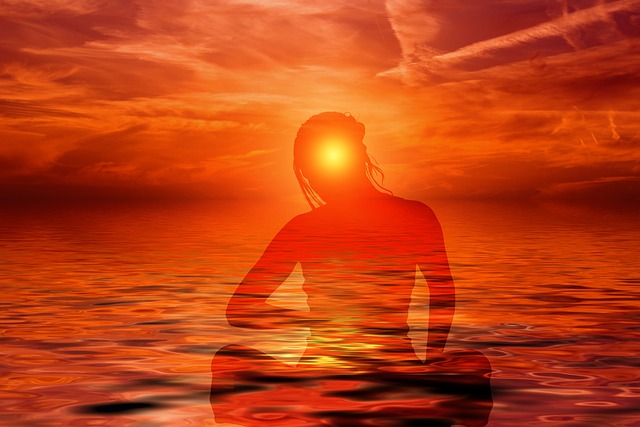
I can’t remember when was the time I heard it first; maybe in school, maybe on the TV watching some documentaries that I adored when I was a little. India, contortionist rishis, and meditating skinny man must have been my first impressions when hearing the word yoga. As I traveled through life, it presented back to me many times, I remember some books with asana illustrations and I know that I was performing Surya Namaskar on my own – I’m not sure how well, but I have done it many times. In one occasion one of my friends was doing the Cobra asana in his student room; even more later I enrolled in an evening class to stretch and try to feel physically better after a busy day at work and juggling family matters. I remember that particular period was a very nice time in my life, when I was going steady to the classes, but then life things dragged me away for a while. Anyway, yoga in my mind was very connected with the body and physical exercise, for it was what I saw in the classes, I do not even know if the word asana meant something to me at that time, but the “exercises” were demanding if you were to do them properly, and my body surely reacted positively, for me being an active young woman that was mainly into endurance sports like running and cycling. I loved the challenge and difficulty of asanas that I was doing. It was a pleasant surprise: I was just standing with my feet on the ground, not doing frenetic body movements and repetitions, just stretching and sweating while breathing and holding the poses, and it benefited my body in such a nice way.
So is it really only that? Poses, sometimes in a sequence? Should you just sweat? There are many yoga stiles today, Astanga, Vinyasa, Power yoga, restorative yoga, Kriya, Kundalini… you can choose from many, in person, on-line, recorded, and surely you can change style and teacher if you do not feel comfortable enough or the style does not suit you in some way. The yoga style is just the way asanas are performed, sometimes in a slow manner, sometimes very dynamically. These “styles” did not exist traditionally and they are a “modern invention” that come into existence in the mid 20-th century. The traditional yoga teachers from the past would only teach individually and adapt their teaching to students, and the asanas would always be the same, but they were done differently according to student needs.
But yoga is much more than the asanas. Of course asanas are very important, and are almost always the way Westerners become introduced to yoga nowadays, but asanas are only a part of the 8 limbs of yoga, te other seven being: yama and niyama (ethical and moral principles), pranayama (control of prana through breathing), pratyahara (withdrawal of the mind), dharana (concentration), dhyana (meditation) and samadhi (absorption in the object of meditation).
Yoga is not only physical but also mental and spiritual practice. It originated in ancient India, and the sage Patanjali had written the first text about yoga in Yoga Sutras. Before his time yoga was a one-to-one transmission from teacher to disciple.
The Sanskrit noun YOGA, can be explained in two ways:
1. root YO, YUJ – means to add, as in addition, and the suffix GHAN that is added to the end of the word;
2. root: YUINJ – means to unite, and the suffix GHAN, and this word means “union”.
The practice of yoga aims to create union between body, mind and spirit, as well as between the individual self and Universal Consciousness and creates a sense of spiritual awakening. There are a few sub-definitions of yoga, but the most important states that yoga is the union of individual soul (Jiivatma) with the Supreme Soul (Paramatma), as defined and given by Shiva.
All yoga practices are done to this end: we start with the body which is an important tool. The body is also the temple for the Consciousness, and we are using our body to realise our full potential.
Yoga has been practiced thousands of years, and many interpretations and styles have developed through the years, but most yogis tend to agree that bringing together the body, mind and breath alters the energy and shifts the consciousness.
Sources:
-Himalayan Yoga Institute, Ganga Devi teachings, www.himalayanyogainstitute.com
-Yogapedia, www.yogapedia.com